
Key Takeaways
- Custom made aprons help Malaysia F&B teams stay clean, look consistent, and support a stronger brand image during daily service.
- The right apron style depends on the role, bib aprons suit kitchens and bar stations, while half aprons work better for waiters, hosts, and banquet staff.
- Fabric choice affects comfort and lifespan, so breathable poly-cotton or cotton blends usually work best for long shifts and frequent washing.
- Useful customization includes simple logo placement, practical pocket layouts, and fit options like adjustable straps or cross-back designs.
- Before ordering, check samples, washing durability, turnaround time, MOQ, and whether the supplier can match your budget and repeat order needs.
A stained uniform can change how guests read your brand in seconds. In cafes, restaurants, and hotels across Malaysia, staff need aprons that keep clothes clean, look neat, and hold up through long shifts.
That is why Custom Made Aprons matter more than ever. They now help with branding, comfort, and daily work, so buyers need to choose the right style, fabric, and supplier without paying for extras they do not need.
What makes custom made aprons a smart choice for cafes, restaurants, and hotels
In Malaysia’s F&B trade, staff move fast and deal with spills all day. A good apron keeps the team presentable while giving the business a more polished look.
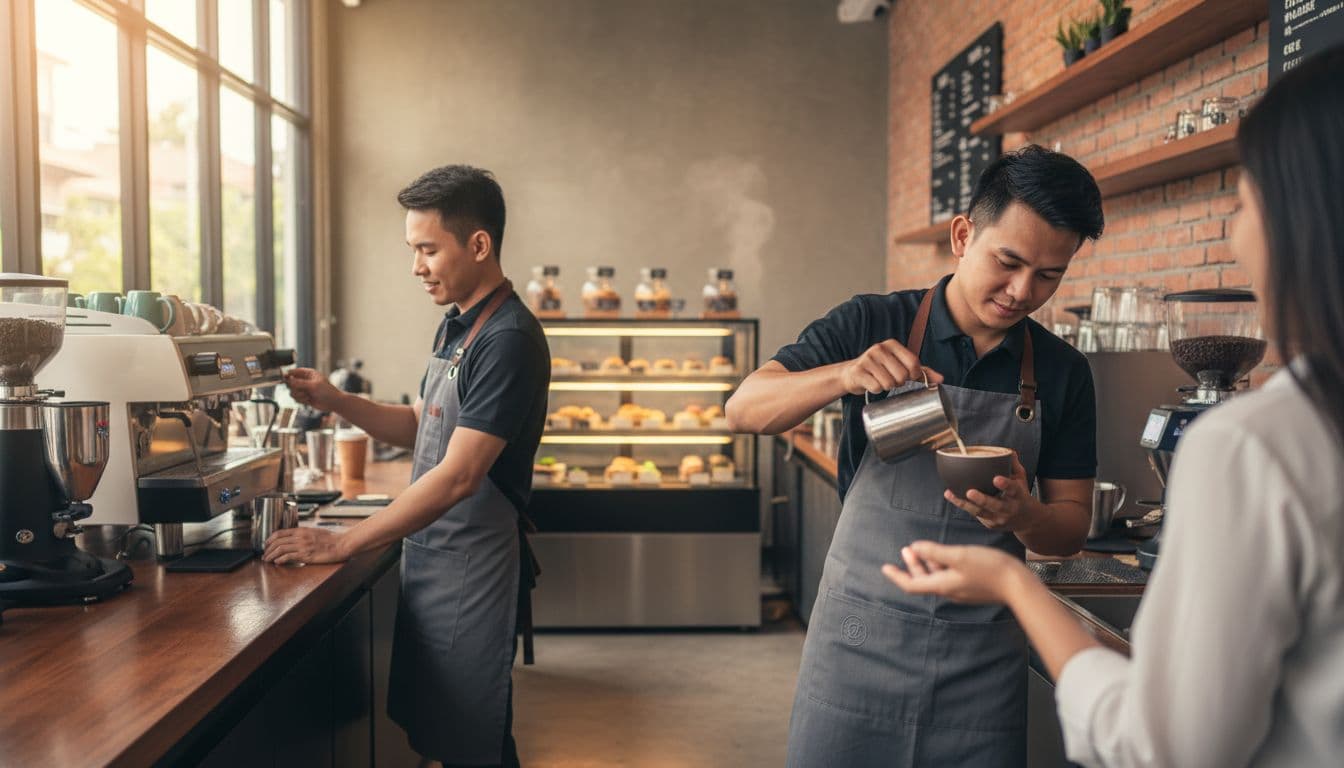
They protect staff while keeping the team looking polished
Aprons give simple, daily protection. Coffee splashes, oil stains, sauces, and flour dust hit the apron first, not the uniform underneath.
That matters in both the kitchen and the dining area. Chefs, baristas, waiters, and hotel service teams all look cleaner for longer, even during peak hours. As a result, staff spend less time worrying about marks on their shirts and more time focusing on service.
Coverage also affects comfort. A full apron helps in hot kitchens and prep zones, while a lighter waist apron works better for front-of-house staff who need speed and easy movement. When the apron matches the job, the team looks steady and ready instead of rushed and messy.
They turn everyday uniforms into a branding tool
A plain uniform does its job, but a custom apron adds identity. Your logo, brand colors, and stitching details help guests remember who served them.
This works well in Malaysia’s cafe scene, where customers notice presentation. A clean bib apron with a small embroidered logo can make a barista look more trusted. In a hotel setting, a neat half apron can make service staff look more organized and refined.
Branding does not need to be loud. Often, a simple logo on the chest or pocket is enough. The goal is to make the team look consistent, because consistency builds confidence with guests.
The best apron styles to match different F&B roles
Different jobs need different apron cuts. A chef handling sauces and heat needs more coverage than a server carrying menus and drinks.
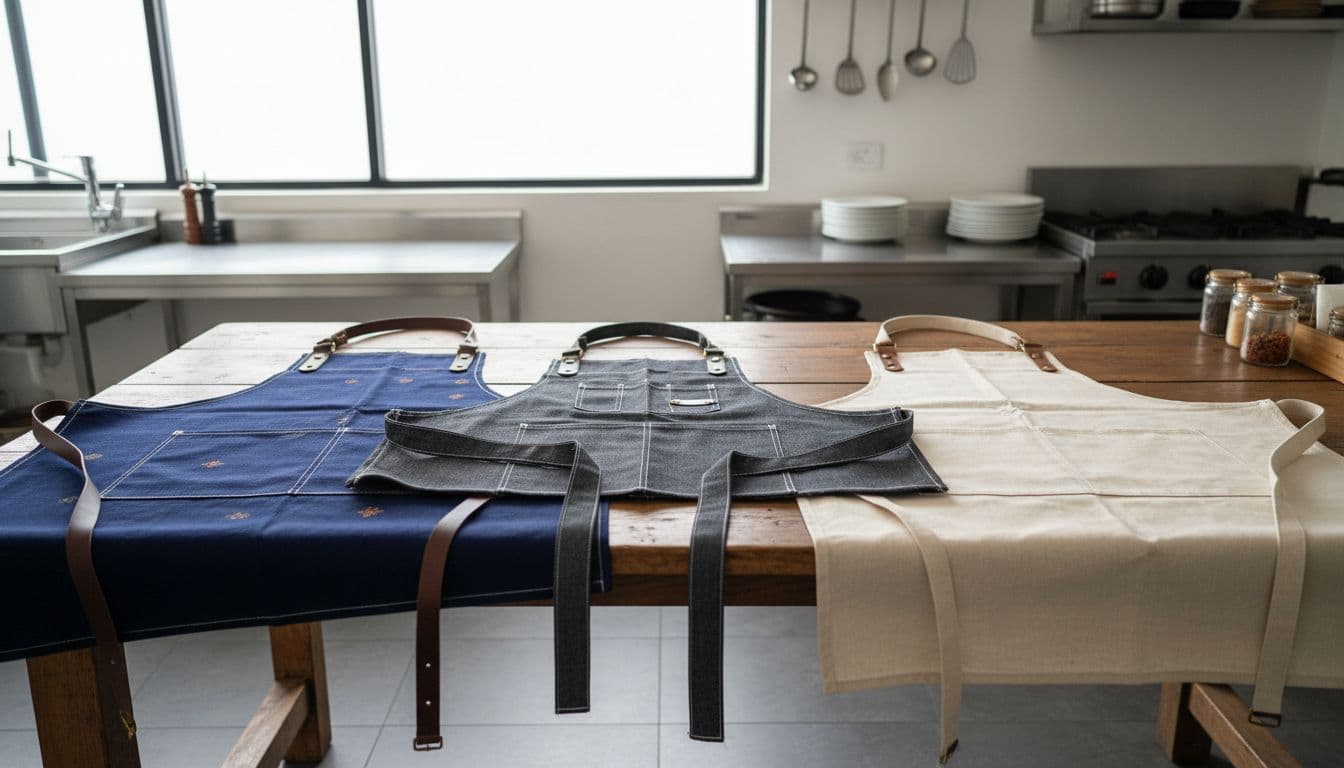
Bib aprons and full aprons work well for busy kitchens and bar stations
Bib aprons are a common pick for cafes, restaurants, and hotel kitchens because they cover the chest and upper legs. That extra coverage helps during prep, cooking, dish plating, and drink making.
They also work well at coffee bars and dessert counters. Milk, syrup, and ice spill often in those areas, so more fabric means better protection. Full-body aprons are also a smart fit for open kitchens, where guests can see the team at work.
Half aprons fit service teams who want a neat and lighter look
Half aprons suit waiters, hosts, banquet staff, and hotel crews who need a cleaner, lighter uniform. They feel less bulky, so staff can move through tables, counters, and event floors with less restriction.
They also look sharp in more formal settings. In a hotel restaurant, a dark waist apron paired with a pressed shirt often gives the right balance of style and function. For casual cafes, a shorter cafe apron can feel relaxed without looking sloppy.
Pocket layouts can make service faster and easier
Pockets are easy to overlook, yet they matter during a long shift. A barista may need space for a pen, receipt roll, or towel. A server may want room for an order pad or POS device. Kitchen staff may carry small tools or a thermometer.
Pocket placement should match the role. Chest pockets suit pens and small notepads. Side pockets work better for towels and tools. Too many pockets, though, can make the apron feel heavy. A simple layout often works best because it supports the job without getting in the way.
How to choose the right fabric, fit, and finish
Apron style catches the eye first, but fabric decides how the apron performs after a week, a month, and a year. In Malaysia’s warm climate, comfort matters as much as looks.
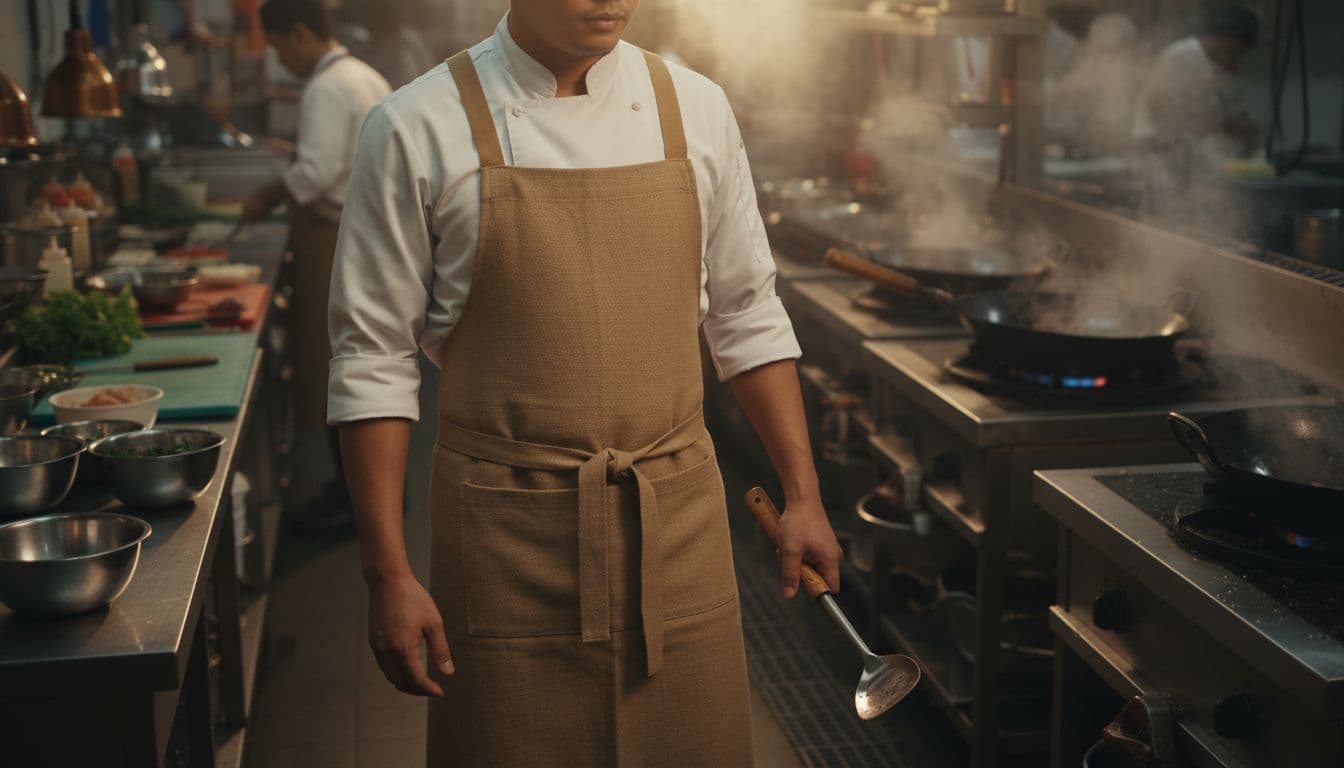
Durable and comfortable fabrics hold up better during long shifts
Cotton blends are popular because they feel softer while still holding shape. Poly-cotton fabric is also common in F&B because it dries faster and handles repeat washing well.
Breathability is a big deal in hot kitchens and outdoor dining spaces. If the fabric feels heavy after one hour, staff will notice by the end of the shift. Good aprons should feel firm, but not stiff. They should also wash well without fading too fast or twisting after a few cycles.
Low-care fabric helps operations, too. When aprons dry quickly and need less ironing, the team can reuse them with less hassle.
Waterproof and easy-clean options are worth it in high-mess areas
Some work zones need more than a standard fabric apron. Beverage stations, dish areas, seafood prep, and sauce-heavy kitchens often do better with waterproof or stain-resistant materials.
These aprons are practical because spills stay on the surface longer. Staff can wipe them down between tasks, which helps during rush periods. That does not mean every team needs waterproof aprons. Front-of-house teams usually prefer lighter materials, while high-spill back-of-house teams get more value from coated or easy-clean finishes.
Good sizing and strap design improve comfort for the whole team
An apron can look great on a hanger and still feel wrong on staff. Adjustable neck straps, cross-back options, and long waist ties make a big difference during a full shift.
Inclusive sizing matters for team comfort and morale. If only a few staff members get a good fit, the uniform program will never feel right. Better fit also improves movement, because staff can bend, carry trays, and turn quickly without constant strap adjustment.
For most F&B teams, the best apron is the one staff stop noticing after ten minutes.
Customization options that help your aprons stand out
Personalization works best when it feels clean and intentional. A smart design supports the brand without making the apron look crowded.
Embroidery gives a premium look, while printing is flexible for bold designs
Embroidery is a strong choice for hotels, upscale restaurants, and brands that want a more polished finish. It feels durable and looks professional on chest logos or name details.
Printing works well for bigger graphics, bright colors, or lower-cost projects. It is often a good fit for new cafes, pop-ups, event crews, and seasonal campaigns. Many Malaysian suppliers now offer low minimums, and some even offer no MOQ, which helps small teams test a design first.
This quick comparison makes the choice easier:
| Method | Best fit | What to expect |
|---|---|---|
| Embroidery | Hotels, premium cafes, long-term uniforms | Clean, textured look, usually costs more |
| Screen or heat print | Bold logos, events, promos | Strong color impact, often more flexible |
| Mixed approach | Larger programs with varied roles | Premium logo with printed accents |
In short, embroidery looks richer, while print gives you more freedom.
Brand colors, fun details, and clean layouts shape the customer impression
Most brands do best with a simple front logo, one or two brand colors, and a balanced pocket layout. That clean look fits modern cafes and formal hotel spaces alike.
As of April 2026, some apron trends in Malaysia include minimalist styling, earthy tones, sustainable fabrics, and barista-style cuts with useful pockets. Nature-inspired prints also show up in casual dining and lifestyle cafes. Still, trends should support the brand, not distract from it.
Small details can add character. A contrast strap, colored stitching, or custom pocket trim can give the apron personality without making it hard to wear every day.
What to ask before ordering custom made aprons in Malaysia
A low price can look good at first and disappoint later. Before placing an order, ask questions that affect wear, washing, and delivery.
Check samples, turnaround time, and washing durability before you commit
Ask for a sample or fabric swatch if you can. Photos rarely show thickness, stitching quality, or how the fabric feels in hand.
Lead time matters, too. Some local suppliers in KL and Selangor handle quick custom printing, while made-to-order work often takes longer. As of April 2026, some apron options in Malaysia start around RM99.90 each, and custom production can take about 14 working days, plus delivery time. West Malaysia usually gets faster shipping than East Malaysia, so plan ahead if the launch date is fixed.
Also ask how the logo holds up after repeated washing. A cheap print that cracks early can cost more in the long run.
Choose a supplier that fits your order size, budget, and brand goals
New cafes often need small batches. Restaurant groups and hotels may need wholesale orders, repeat runs, and matching colors across branches. Because of that, the right supplier is not always the cheapest one. It is the one that communicates clearly, meets the brief, and delivers steady quality.
Look for answers on fabric options, print method, reorder support, and minimum order quantity. Some suppliers now offer nationwide service, wholesale pricing, and no-MOQ orders, which helps both small and large buyers. Clear replies and realistic timelines are usually a better sign than a fast quote alone.
Choosing the right apron pays off every day
The best Custom Made Aprons balance four things, protection, comfort, brand image, and cost. When one of those falls short, staff feel it fast.
For Malaysia’s cafes, restaurants, and hotels, the smart move is simple. Pick the style for the job, choose fabric that survives daily washing, keep customization clear, and order from a supplier that can deliver the same quality every time.
Frequently Asked Questions About Custom Made Aprons for Malaysia F&B
What type of apron is best for restaurant and cafe staff in Malaysia?
The best apron depends on the job. Bib aprons work well for chefs, baristas, and prep staff because they give more chest and leg coverage. Half aprons fit service teams better because they feel lighter and allow easier movement on the floor.
What fabric should I choose for custom made aprons in Malaysia’s climate?
Breathable, easy-care fabrics usually make the most sense. Poly-cotton and cotton blends are common because they feel comfortable in warm conditions, dry faster, and handle repeated washing better than heavier materials.
Are waterproof aprons worth it for F&B businesses?
Waterproof or easy-clean aprons are worth it in high-spill areas like beverage stations, dishwashing zones, seafood prep, and sauce-heavy kitchens. For front-of-house teams, lighter fabrics are often a better fit because comfort and appearance matter more there.
Is embroidery or printing better for apron branding?
Embroidery suits hotels, premium cafes, and long-term uniform use because it looks polished and holds up well. Printing is a better fit for bold logos, event use, promotions, or smaller-budget orders that need more design flexibility.
What should I ask a supplier before ordering custom aprons in Malaysia?
Ask about fabric options, sample availability, logo durability after washing, turnaround time, MOQ, and reorder support. It also helps to confirm delivery timing for West Malaysia or East Malaysia, especially if you have a launch date or opening event.