
A cheap custom corporate uniform can cost more than it saves. When fabric traps heat, sizing runs off, or logos crack after a few washes, your team feels it first with a hit to their professional image, and your brand shows it next.
That is why choosing the right corporate uniform supplier is not only a buying task. It affects staff comfort, daily presentation, replacement cost, and how smoothly your rollout goes while protecting your brand identity. Business owners, HR teams, SMEs, factories, and event organizers usually worry about the same things: poor fabric quality, late delivery, weak logo finishing, and sizes that do not fit real people.
A smart comparison starts before you ask for a quote.
Key Takeaways
- Define your uniform needs first by listing job roles, work settings, wear conditions, and customization level to avoid mismatched garments and poor staff acceptance.
- Prioritize fabric quality, sample workmanship, and logo finishing that match real-world demands like Malaysia’s heat, humidity, washing, and daily use for long-term comfort and brand image.
- Confirm supplier reliability through clear lead times, MOQ, sizing support, communication, and re-order capabilities to ensure smooth rollout without delays or fit issues.
- Compare quotations line by line for true value, balancing upfront cost with wear life, inclusions like samples and alterations, and avoiding the cheapest option that hides risks.
- Use a checklist for past work proof, industry fit, and certifications; start with a pilot batch for large orders to test fit, performance, and consistency before full production.
Start with Your Uniform Needs Before You Compare Suppliers
Seek a professional consultation first to clearly define your uniform needs before comparing suppliers. Many buyers compare suppliers too early. They ask for pricing first, then try to work backward. That often leads to the wrong garment, the wrong fabric, or a design that looks good on screen but fails on the job.
The better approach is to define how the company uniform will be used. A front desk team needs a different uniform from a warehouse crew. An event shirt has different demands from a hospitality blouse worn five days a week. Once your use case is clear, it becomes much easier to judge whether a uniform supplier fits your project.
If you want a benchmark for what a full-service order can include, this overview of custom made uniform shows the kind of options buyers usually compare.

Start with the real workday. Office staff usually need breathable, neat-looking pieces made from comfortable fabrics that stay presentable in air-conditioned spaces and during travel between sites. Outdoor crews need lighter, quicker-drying fabric because Malaysia’s heat and humidity make heavy cloth hard to wear for long hours.
Food handling and healthcare add hygiene concerns. Industrial work may need custom workwear with stronger fabrics, extra pockets, stretch panels, or safety-focused features. Retail and event staff often need polo shirts or casual wear for easy movement and a polished look after long standing hours.
Comfort is not a soft issue. If staff feel hot, restricted, or awkward, they will resist wearing the uniform properly. Then the whole plan breaks down.
Decide what level of customization your company uniform needs
Some buyers need a basic branded polo. Others need a full custom corporate uniform or bespoke corporate uniforms with exact brand colors, embroidery placement, special collars, cuffs, pockets, modest cuts, and separate male and female fits.
This is where many quotations stop being equal. One supplier may offer only ready-cut templates with logo application. Another may support deeper customization, including pattern development and role-based designs. That difference matters if your staff work in different departments.
A true custom corporate uniform should match both brand use and job use. A mockup can hide practical issues, such as stiff collars, poor sleeve length, or pockets placed in the wrong spot. Therefore, define the must-haves before you compare proposals.
Check the Supplier’s Product Quality, Fabric Options, and Workmanship
Photos help, but they rarely tell the full story. Fabric hand feel from high-quality materials, seam strength, color fastness, and logo finishing are what decide whether corporate shirts still look good after months of wear.
In 2026, many Malaysian buyers also ask for more than basic polyester or cotton, with material excellence now expected in easy-care fabric, moisture-wicking performance, wrinkle resistance, antimicrobial finishes, and more sustainable materials. These are common buying points, especially for larger companies and customer-facing teams.
Ask what fabrics they offer and why each one suits the job
A good corporate uniform supplier should explain fabric choices in plain language. Cotton feels natural and breathable as comfortable fabrics, but it may wrinkle more and can shrink if not finished well. Poly-cotton blends often balance comfort, shape retention, and easier care, which contributes to staff satisfaction. Performance fabrics help active teams because they pull sweat away faster and dry more quickly.
Some roles benefit from added features. Healthcare and hospitality teams may prefer antimicrobial fabric treatments. Retail, events, and field staff often like lightweight moisture-wicking polos. Office teams may ask for wrinkle-resistant blends that still look sharp by late afternoon.
There is also more interest now in recycled polyester, organic cotton, bamboo fabric, eco-friendly materials, and certified safer materials. If your company has ESG or procurement standards, ask whether the supplier can source OEKO-TEX certified fabric or GOTS-certified organic cotton where needed. You do not need every option, but the supplier should understand why one fabric suits one job better than another.
Review sample garments, stitching, and logo finishing closely
A sample is where promises meet reality. Check the stitching along shoulder seams, side seams, hems, and collar joins. Loose threads, uneven tension, or puckering are early warning signs.
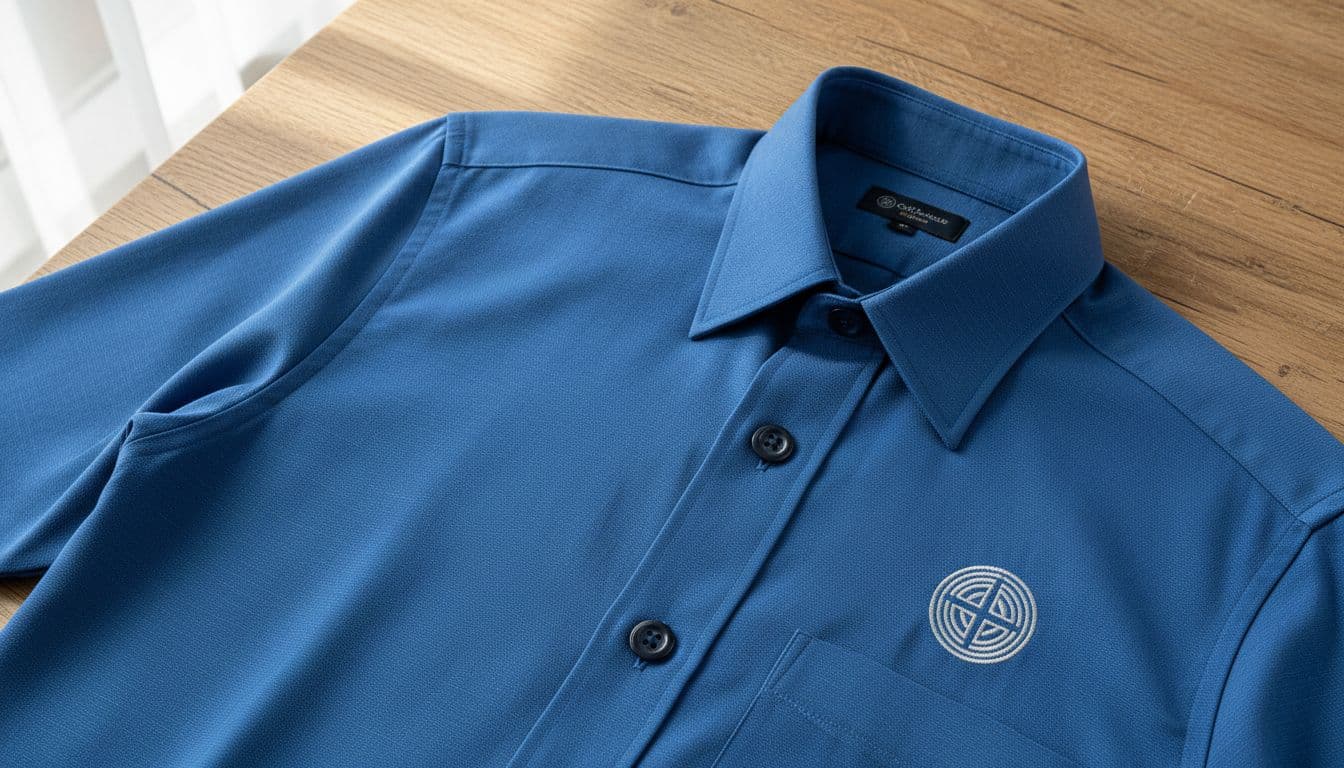
Feel the fabric. Does it feel dense enough for daily use? Does it recover after being handled? Look closely at buttons, zippers, and reinforcements on stress points. Then inspect the logo finishing. Custom logo embroidery should look clean and balanced, not heavy and stiff. Printed logos should have sharp edges and good color hold, not a plastic feel that may peel fast.
Compare Service Reliability, Communication, and Production Capacity
A corporate uniform supplier may make a nice sample and still struggle with rollout. For most companies, the real test is whether the supplier can handle revisions, fit issues, and repeat orders for your custom apparel order without confusion.
Clear communication matters because uniform projects often involve several people, HR, procurement, operations, and team leads. If responses are slow or vague before payment, the process rarely improves later.
Confirm lead times, minimum order quantity, and re-order support
Ask for the full timeline, not only the production date. You need to know the sampling period, approval steps, final manufacturing lead time, and delivery schedule. If the project is urgent, ask whether the supplier can handle a partial rush batch and the rest later, especially for bulk orders requiring reliable delivery.
Minimum order quantity also matters. A small SME may not want the same MOQ as a factory rollout. In addition, ask whether the supplier can repeat the same custom made uniform later for new hires. Re-order support saves time and keeps your team looking consistent.
Malaysia-based production often helps here. Local coordination can reduce approval delays, shipping surprises, and communication gaps, reinforcing the corporate uniform supplier’s role in logistics and production.
Look at how the supplier manages sizing and fit
Sizing problems waste budget fast. They also damage staff acceptance, especially if the company uniform feels too tight, too boxy, or uneven across departments.
A reliable corporate uniform supplier offering workwear solutions should provide clear size charts and, for larger orders, fitting samples made from high-quality materials. Ask whether they offer unisex cuts only, or separate male and female fits. Plus-size options matter too, and so does sleeve length, body length, and modest coverage where needed.
Sizing errors are one of the most expensive uniform mistakes because they create rework, complaints, and early replacement orders.
Also ask how the supplier handles measurement mistakes. A fair alteration or exchange policy shows that they plan for real-world issues, not only ideal orders.
Make Sure the Price Matches the Value You Need
Price matters, but the lowest quote often hides the highest risk. Two suppliers can quote different rates for what looks like the same shirt, while the actual fabric, logo method, and service level are not equal at all. Even compared to ready-made shirts, custom corporate uniforms require checking for affordable prices that deliver true value.
That is why buyers should compare quotations line by line.
Read quotations line by line so you know what is included
This quick table shows what you should check before you approve any order:
| Quotation item | What to confirm |
|---|---|
| Fabric type | Cotton, poly-cotton, microfiber, performance blend |
| Fabric weight | GSM or fabric weight, if available |
| Logo method | Embroidery, silkscreen printing, heat transfer, sublimation |
| Logo positions | Number and size of logo areas included |
| Customization scope | Collar, cuff, pocket, piping, pattern work |
| Sampling charges | Whether sample cost is included or separate |
| Alteration policy | Charges for size changes or corrections |
| Delivery and taxes | Freight, SST, packaging, and handling |
A lower quote may leave out sample cost, delivery, artwork setup, or logo positions. Then the real price rises later.
Balance budget with wear life, comfort, and brand image
Good uniforms are worn often. Front-line staff, supervisors, sales teams, and event crews put real stress on fabric and finishing. Because of that, a slightly higher upfront cost for quality corporate apparel can lower your total spend over time on corporate shirts.
If the garment holds shape longer, staff wear it more willingly, and you reorder less often. That improves both budget control and brand image for your corporate apparel. By contrast, poor custom workwear can look tired within weeks, even if it looked fine on day one. Seeking affordable prices means balancing these factors for long-term savings.
The cheapest quote can become the most expensive order after rush fixes, replacements, and inconsistent re-orders.
Frequently Asked Questions
What should I do before comparing corporate uniform suppliers?
Start with a professional consultation to define your uniform needs based on job roles, work settings, wear conditions, and customization level. This prevents choosing the wrong fabric or design that fails on the job. A clear use case makes it easier to judge supplier fit.
How can I check the quality of fabrics and workmanship?
Ask for fabric explanations suited to your jobs, like breathable poly-cotton for heat or antimicrobial for hygiene. Review physical samples closely for stitching strength, fabric feel, logo finishing, and wash performance. Photos alone rarely show seam issues or real durability.
Why is sizing and fit so important for custom uniforms?
Sizing errors lead to rework, staff complaints, and early replacements, wasting budget. Reliable suppliers provide size charts, fitting samples, separate male/female fits, and alteration policies. This ensures comfort and acceptance across departments and body types.
How do I compare supplier quotations fairly?
Read quotes line by line for fabric type, logo methods, inclusions like samples and delivery, and alteration charges. The lowest price often excludes key items, raising total cost later. Balance budget with wear life and service for long-term savings.
Should I place a test order before a full uniform rollout?
Yes, a pilot batch is smart for large or customized projects to test fit, comfort, color hold, and washing. It catches issues early, avoiding big mistakes on hundreds of pieces. This step confirms the supplier delivers consistency for re-orders.
Use a Simple Supplier Checklist Before You Place the Order
By this stage, you should have a shortlist, not a pile of random quotes. Now the goal is to reduce risk before you commit to a full run.
Keep the final review simple. A supplier is a stronger fit if they can show:
- Clear fabric recommendations for your work setting
- Sample quality that matches the promised finish
- Realistic lead times and clear MOQ terms
- Reliable sizing support for your team
- Re-order ability for future staff additions
Ask for proof of past work, client experience, and relevant standards
Ask to see recent project photos, not only polished catalog images. Look for work similar to your industry. A supplier that handles office wear may not be the best fit for heavy-duty custom workwear, and for events or casual needs, check their t-shirt printing service and experience with imprintable apparel. The reverse is also true.
Customer reviews and case examples can help, especially when they mention delivery, repeat consistency, and handling of fit issues. If your procurement policy requires it, ask whether the supplier follows a quality system such as ISO 9001 or can source fabrics with the certifications your sector needs, including sustainable practices. Some industries may also need hygiene or safety-related compliance.
Place a test order first if the project is large or high risk
A pilot batch is a smart move for larger teams, multi-branch rollouts, or highly customized garments, especially for a custom apparel order. It lets you check fit, comfort, color accuracy, and wash performance before you scale up.
This step costs a little time, but it can save a large budget mistake. If the first batch exposes issues with sizing, logo placement, or fabric feel, you can fix them before hundreds of pieces go into production.
The right supplier is not only the one with a fair quote. It is the one that helps you avoid avoidable problems.
Choosing a custom made uniform supplier comes down to fit for purpose. The best partner understands the job, offers the right fabric and finishing like custom logo embroidery, manages sizing well, and can support repeat orders as your team grows, strengthening your brand identity.
That is how you protect brand image, staff comfort, and long-term cost at the same time. When the custom corporate uniform works in real life, the buying decision was the right one.