
How to Choose a Construction Company Staff Uniform That Works
A construction company staff uniform isn’t there to look nice in a catalog. It has to survive heat, dust, sweat, bending, climbing, and constant washing.
If your crew feels boxed in by stiff shirts or heavy pants, you will hear about it fast. If your construction worker uniform looks mismatched, faded, or hard to identify, clients notice that too.
The right uniform does two jobs at once, as it supports the work and it supports your professional appearance. That is the standard worth building around.
Key Takeaways
- Prioritize Function Over Fashion: Construction uniforms serve as essential gear, not just branding; they must provide durability, movement, and protection in harsh site conditions.
- Comfort Drives Compliance: If a uniform is restrictive or uncomfortable, workers may alter or discard it, compromising safety and professional standards.
- Strategic Layering and Visibility: Utilize a layered approach to meet varying safety requirements, ensuring high-visibility gear is balanced with base layers that remain comfortable and functional.
- Consistent Branding: Select logo application methods—like embroidery for polos and printing for large T-shirt graphics—that withstand daily industrial washing without cracking or peeling.
- Manageable Uniform Programs: Implement a structured system for sizing and replacement to ensure your crew remains professional and consistent, even as individual items wear out.
What your construction team needs from a uniform
Before you pick colors, logos, or styles, start with the job itself. A construction company uniform has to protect your team, move with them, and still look like it belongs to one company operating on busy construction sites.
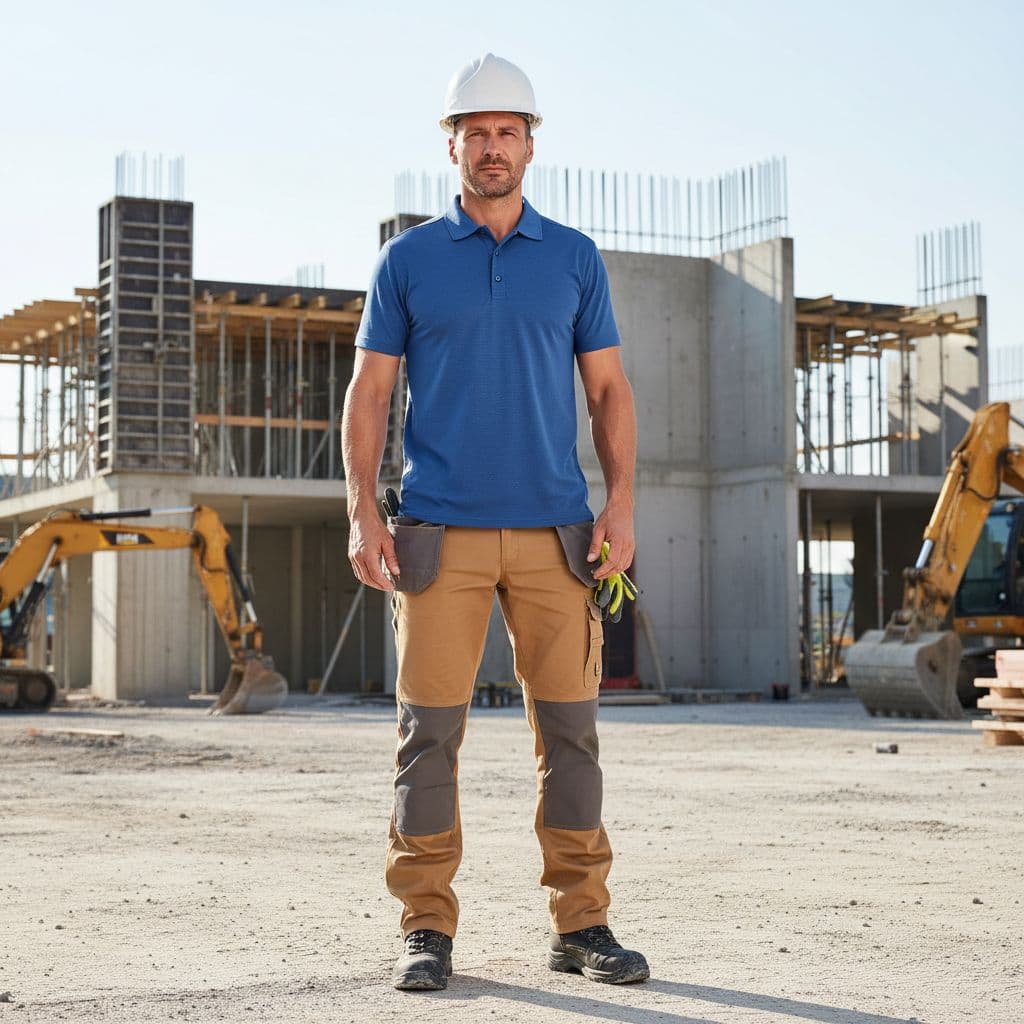 > A good uniform is gear first, branding second.
Why comfort matters on long site days
Long site days expose every bad uniform decision. A shirt that traps heat, rubs at the neck, or pulls across the shoulders becomes a problem by mid-morning.
You want breathable fabric, room to move, and a fit that works when your crew reaches, kneels, lifts, and climbs. Because this clothing functions as essential personal protective equipment, if the uniform is too tight, too heavy, or too hot, workers will stop wearing it the way you intended. Sleeves get rolled up, buttons stay open, and layers come off when they should stay on.
That is why comfort is not a side issue. It is part of compliance, morale, and output. A staff uniform for your construction company should feel like functional workwear, not a costume.
How the right uniform supports safety and visibility
Good safety workwear design starts with one simple question: can you spot your team fast? On a busy site, that matters.
Bright colors, reflective stripes, and clear company identification help workers stand out around vehicles, equipment, and low-light areas. A high visibility vest is a core component for many crews, but the trick is finding the right balance. You want visibility without bulky add-ons that catch, bunch, or limit movement. To remain compliant, a complete kit should also include a hard hat, work boots, and safety glasses to meet OSHA requirements. Providing this protective clothing alongside other necessary safety equipment ensures your team stays secure while performing their daily tasks. If some roles need extra visibility and others don’t, build those differences into the uniform program instead of forcing one outfit on everyone.
Keep the work in mind too. Electricians, welders, general labor crews, and supervisors don’t face the same risks. Your uniform should support site rules, not fight them.
What makes a uniform look professional on a construction site
Professional doesn’t mean polished like an office lobby. It means your crew looks organized, easy to identify, and ready for work.
Consistency does most of the heavy lifting. Matching colors, clean logo placement, and a neat fit tell clients and inspectors that your company pays attention. A messy mix of faded tees, random jackets, and different shades of close enough sends the opposite message.
This is still a corporate uniform, even when it is covered in dust by noon. If your team looks sharp at the start of the day and stays readable on site, your company looks more reliable.
Choose fabrics and garment styles that can handle real work
Fabric choice is where a lot of uniform programs go wrong. The wrong material can feel fine in a showroom but fail in the field within a week. When sourcing industrial uniforms, you need to prioritize materials that can withstand common work hazards while maintaining their integrity over time.
The best fabrics for durability and comfort
A fabric does not need to win a beauty contest. It needs to hold up, wash well, and feel right for the job.
Here is the quick comparison that matters most:
| Fabric | Best use | Watch for |
|---|---|---|
| Cotton-polyester blend | Everyday shirts, polos, light work pants | Not ideal for heat or flame hazards |
| 100% polyester | Hi-vis layers, lightweight work shirts, frequent washing | Can feel less breathable against skin |
| 100% cotton | Hot-weather base layers, soft everyday wear | Shrinks, fades, and wears faster |
| Nylon or ripstop nylon | Jackets, outer layers, wet conditions, high-wear zones | Less comfortable as a full base garment |
| Flame-resistant fabric | Welding, hot work, spark exposure | Costs more, may feel heavier |
For most teams, cotton-poly blends are the sweet spot. They give you comfort, color hold, and easier care. Pure polyester works well when you need fast drying and repeat washing. Cotton still has a place in hot weather, but it usually needs more frequent replacement.
For rougher use, heavier materials like a duck canvas jacket or rugged work pants make sense for outer layers and trousers. When heat or sparks are part of the job, use flame-resistant gear where needed. Do not try to make do with standard shirts around special hazards.
Which uniform pieces work best for different roles
Not everyone on site should wear the same thing. A site supervisor, a labor crew, and technical staff move differently and carry different gear.
For supervisors and client-facing staff, a durable custom polo T-shirt or a branded polo often hits the right note. It looks tidy, keeps the company visible, and still works under a vest or jacket. Labor crews often need moisture-managing T-shirts, cargo pants, and hi-vis outer layers. Technical teams may prefer long-sleeve shirts for light protection and a cleaner look.
Think in layers. Short-sleeve tops for heat, long sleeves for sun or abrasion, jackets for weather, and hi-vis pieces when the site requires them. The best uniform systems are mixed on purpose, not random by accident.
Small design details that make uniforms last longer
This is where good uniforms separate themselves from cheap ones. The details matter when people bend, kneel, climb ladders, and carry tools every day.
Reinforced stitching, stronger seams, bar tacks at stress points, and extra fabric in knee or elbow zones can add real life to a garment. Pockets matter too. If pockets are too shallow, badly placed, or stitched weakly, they fail fast. Look for reinforced knees that provide added protection or allow for the insertion of knee pads to ensure comfort during long shifts on hard surfaces.
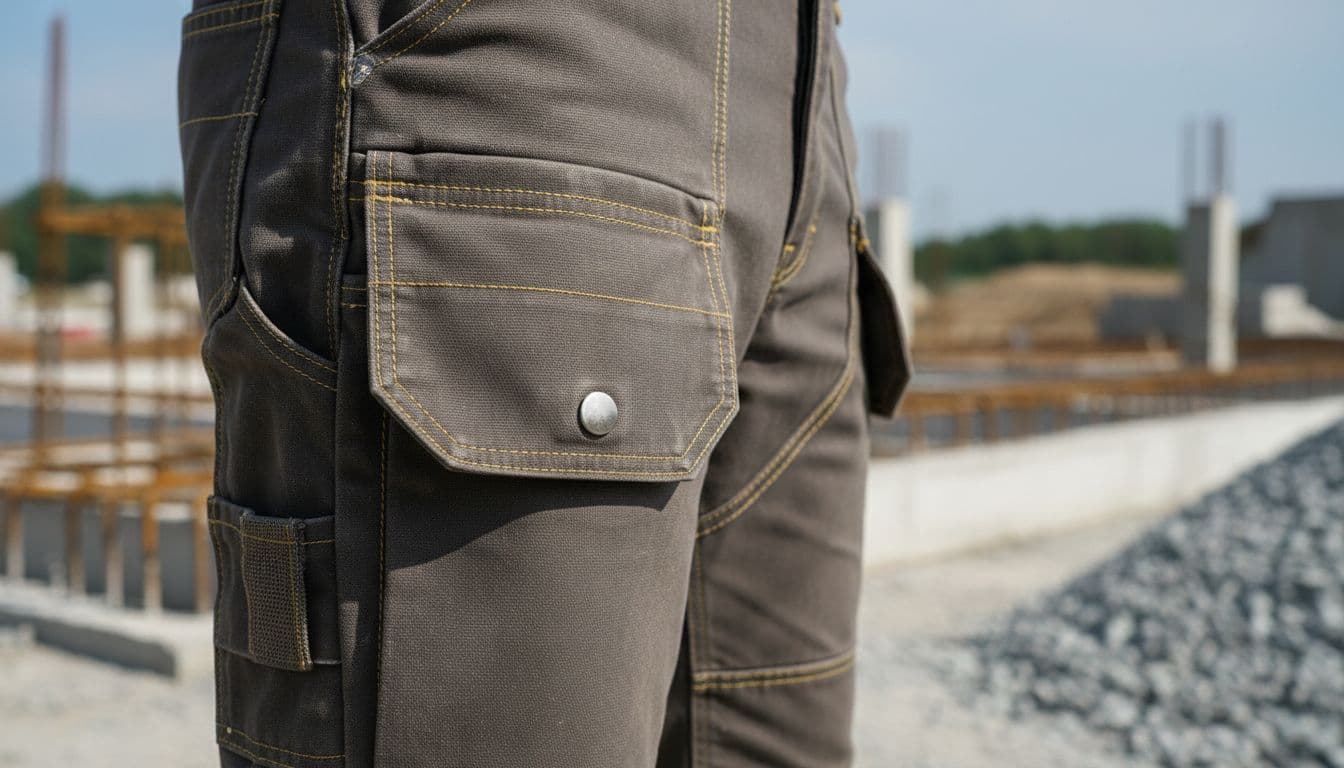 Look closely at the areas that take abuse: seat seams, pocket corners, crotch panels, and cuff edges. A cheaper pair of pants can cost more if you are replacing it twice as often.
Design customized construction uniforms that show your brand without hurting performance
Branding matters, but construction staff shirt design has a limit. If the shirt looks busy, peels after washing, or interferes with safety features, it stops doing its job. When focusing on logo branding, remember that the uniform must remain functional to be effective.
Where to place your logo so it is easy to see
The best logo placement is usually simple. Left chest, sleeve, and upper back are the most useful spots because people can spot them without the design taking over the whole garment.
The front chest works well for daily identity. Sleeves can carry a smaller mark. The back gives you space for a bigger company logo on shirts or jackets, which helps on larger sites. Keep clear space around reflective strips, harness areas, and safety markings. A good construction company shirt design should stay readable even with layers on.
How to choose colors that work on site
Color choice is not just an exercise in professional identity. It affects visibility, dirt show-through, heat, and how unified your team looks at a distance.
Dark navy, charcoal, and gray hide dust better than white. Bright yellow, orange, and lime improve visibility, especially in outer layers. Many companies solve this by splitting the system: darker base garments, brighter safety layers, and one or two brand colors for consistency. That gives you a cleaner look without turning every shirt into a stain magnet.
A smart construction staff shirt design keeps the palette tight. Too many colors make a uniform look pieced together.
Printing and embroidery that hold up to hard use
This is where many branded uniforms fall apart, sometimes literally. If your logo cracks, peels, or puckers after a few washes, the uniform starts looking tired long before the fabric does.
T-shirt printing is often the better choice for larger back graphics and lighter garments. It keeps the shirt flexible and can work well for high-volume crew wear. An embroidered logo usually makes more sense for polos, jackets, caps, and smaller chest logos because stitching looks clean and lasts. Still, heavy embroidery on thin shirts can feel stiff.
Ask how the branding will handle heat, detergent, and repeat washing. The best construction company uniform is one that still looks like your company after months of real use, not one week of sample-room use.
Plan your uniform program so it works every day
A well-planned custom workwear strategy can still fail if the rollout is not managed correctly. If sizing is off, reorders are slow, or replacements never match, the whole system drifts.
How to get sizing right for your whole crew
Guessing sizes is expensive. Collect actual measurements or fit samples before you place bulk orders.
Leave room for movement and for seasonal layering. A shirt that fits over a base layer in summer may not work over thermal wear in winter. Different body types need different cuts too. If you only offer one fit, somebody ends up uncomfortable, and uncomfortable workers stop wearing uniforms properly. Beyond clothing, ensure your program accounts for necessary safety gear, such as hand protection, ear protection, and specialized items like a face shield or safety goggles depending on the specific job site requirements.
How often construction uniforms need washing and replacement
Construction uniforms get washed hard and often. Sweat, dust, mud, grease, and sun exposure wear down fabric, color, and branding faster than many buyers expect.
That is why easy-care garments matter. Shirts that hold shape, dry quickly, and resist fading save time for workers and money for your company. Replacement cycles vary by role, but the pattern is predictable. High-contact crew wear burns out faster than supervisor polos or light-duty shirts. Build spares into your order from the start, and look for providers that offer no minimum order policies so you can easily replace individual damaged items without overstocking.
When custom made uniforms make more sense than off-the-shelf options
Off-the-shelf workwear is fine when your needs are simple. It gets harder when you need cleaner branding, role-based garments, better sizing, or steady color matching across different pieces.
That is where a custom made uniform program starts to pay off. You can align your polos, tees, jackets, and hi-vis layers under one system instead of patching together different suppliers. If you need custom uniform support, construction company shirt design help, or reliable t-shirt printing and embroidery services, a supplier such as JS Uniform can help you build a set that fits your company rather than forcing your company to fit the stock.
Frequently Asked Questions
How do I balance professional branding with construction durability?
Focus on clean, simple logo placement like the left chest or upper back to keep branding legible without being overwhelming. Use high-quality embroidery for structure on polos and durable screen printing for larger garments, ensuring the materials can handle frequent, heavy-duty washing.
Should every employee on the site wear the same uniform?
While consistency is important, different roles have different needs. Supervisors may prefer a branded polo for a cleaner appearance, while labor crews benefit from moisture-wicking shirts and reinforced trousers. Use a unified color palette to keep the team looking consistent even when specific pieces vary by job function.
How often should we replace construction uniforms?
Replacement cycles depend heavily on the intensity of the work and the garment type. High-contact gear like cargo pants or labor shirts will wear out faster than supervisor polos, so build in a buffer for individual replacements rather than waiting for a full group reorder.
Are custom-made uniforms better than off-the-shelf options?
Off-the-shelf options work for simple needs, but custom programs offer better consistency in color, fabric quality, and sizing across your entire fleet. A custom program ensures that your branding remains uniform and that you can easily reorder specific items as they reach the end of their service life.
Conclusion
The best uniform for your crew is not the fanciest one. It is the one your team can wear all day, wash all week, and still trust on site.
If you get the basics right, including durability, comfort, visibility, and clean branding, your uniform starts pulling its weight. By providing customized construction uniforms, you ensure that your team remains safe and comfortable on busy construction sites while maintaining a professional appearance that builds client trust. Ultimately, the right gear helps your crew look organized and keeps your company credible, ensuring the uniform supports the work instead of slowing it down.