
A company T-shirt is not just a piece of clothing. It is part uniform, part branded apparel, and often the first thing people notice at a roadshow, exhibition, or team event. High-quality corporate wear is essential for fostering team cohesion and projecting a polished image throughout the Malaysian market.
That is why effective company t-shirt design starts with your business goals rather than the artwork itself. The shirt should look professional, feel comfortable in the humid Malaysian weather, suit the setting, and print well without pushing your budget off track.
If you are in HR, marketing, procurement, or event planning, the smart move is to settle these practical decisions before finalizing your order.
Key Takeaways
- Define the Purpose: Before selecting artwork, clearly define the use case—such as uniforms for staff or promotional gear for events—to ensure the design aligns with your brand and functional requirements.
- Prioritize Comfort and Durability: Given Malaysia’s humid climate, select fabrics like premium cotton or high-performance blends that offer breathability and maintain their quality through regular washing.
- Optimize Artwork for Clarity: Use high-quality vector files, keep text minimal for readability, and ensure your logo placement is balanced and professional rather than crowded.
- Select the Right Printing Method: Match your printing technique (e.g., screen printing, embroidery, or DTF) to your specific design complexity, quantity, and budget to ensure a polished, cost-effective result.
- Plan Logistics Early: Finalize your sizing, budget, and project timeline well in advance to avoid production delays and ensure the finished apparel meets your corporate standards.
Start with the purpose, audience, and use case
The best shirt for a product launch is not always the best shirt for daily staff wear. A team-building tee can be casual and fun, while a front-desk uniform usually requires a cleaner, more professional look. The point is simple: the design should reflect your brand identity and match the specific job the shirt has to do.
Think about where it will be worn. Company uniforms, roadshows, exhibitions, annual dinners, school events, charity runs, onboarding packs, and promotional campaigns all call for something slightly different. A shirt that looks fine for one day on stage may feel wrong after six hours on the floor. If you are struggling to design from scratch, many suppliers offer customizable templates that ensure a professional look without the hassle of a complex design process.
If people will wear the shirt often, treat it like a uniform decision, not event merchandise.
Who will wear the shirt, and how often?
Start with the people. Office staff, warehouse teams, event crews, student volunteers, and sales reps do not work in the same conditions. Age range and fit preferences matter significantly.
If the shirt is for daily or weekly wear, choose better fabric and a more timeless layout. Loud graphics date quickly, whereas clean branding lasts longer. When your team feels comfortable and confident, they are more likely to wear their apparel without complaint.
Is this for branding, uniform use, or event promotion?
This question shapes almost everything. A uniform usually needs a simple corporate T-shirt design, smaller logo placement, and colors that fit your brand. An event shirt can be bolder, especially for team-building, charity runs, or product launches.
For promotional use, a personalized shirt is a far better choice for a promotional giveaway than generic items because it builds a stronger connection with the recipient. For uniforms, polish matters. For onboarding packs, comfort matters more than visual noise. Decide the priority early, and the rest of the process becomes much easier.
Choose fabric and shirt style that suit Malaysia’s weather and working conditions
In Malaysia, fabric is not a small detail. Heat and humidity change how a shirt feels after one hour, not just at first wear. If the shirt feels heavy, traps heat, or turns rough after washing, staff notice.
For most teams, comfort, durability, and appearance need to balance out. That balance also affects the final print result. Some fabrics feel great but do not suit every print method. When choosing, consider the importance of selecting the right fabric color to ensure your logo pops and remains visible regardless of the lighting. Some materials look neat on day one but do not hold their shape well after repeat use.
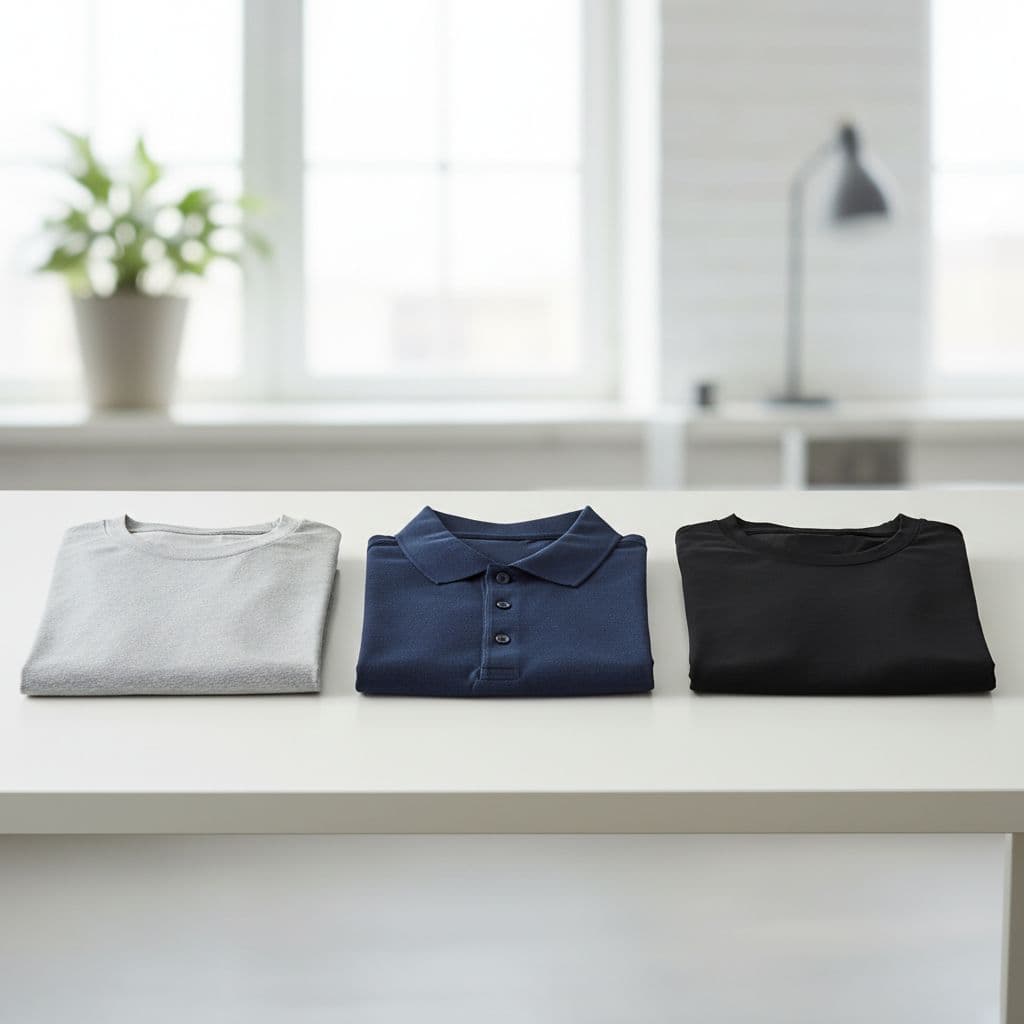 ### Which fabric works best for your team?
Premium cotton feels soft and breathable, which makes it a good pick for office wear or shorter indoor events. Performance tees dry faster and handle sweat better, so they suit outdoor staff and active roles. This type of fabric works particularly well for sports days, road crews, and charity runs.
For many corporate orders in Malaysia, a blend of premium cotton and polyester is the easiest all-round choice. It gives decent comfort, better durability, and easier care. It also works well when you are balancing your budget with long-term wearability.
The right fabric should also match the print method. That matters more than many buyers expect.
Round neck, polo, or another style?
Round-neck shirts suit casual events, campaigns, student activities, and giveaway programs. They are familiar, easy to wear, and often simpler on the budget.
Polo shirts usually make more sense for uniforms, client-facing staff, exhibitions, and corporate events. They look neater without trying too hard. If your team needs something more polished, custom polo shirt options are often the safer choice than a standard tee. For professional indoor environments, you might also consider long sleeve shirts, which provide a more formal appearance while protecting staff from overly cold air conditioning.
A collar or sleeve length can change the whole impression. Same logo, same brand, different message.
Plan the artwork so the logo looks clear and professional
A shirt can have good fabric and still fail because the artwork was rushed. This is where many problems start, especially with custom company T-shirt printing for events with tight timelines.
Keep the design clean and ensure your files are high-quality. Most printing mistakes do not come from a lack of creativity, but from blurry logos, poor placement, and too much text. Utilizing a design lab or an online design tool can help you visualize a realistic mockup, ensuring your branding is perfectly positioned before production begins.
 Where should the logo go on the shirt?
The left chest is a classic choice for uniforms and polos. It looks professional and does not overwhelm the shirt. Center chest placement is more visible and often works for campaigns or casual event shirts.
Back prints are useful when the shirt needs visibility from a distance, such as roadshows, exhibitions, and large crew teams. Sleeve prints can add detail, but only if the rest of the design remains simple. Too many print areas can make the garment look crowded, so aim for a balanced layout.
What file quality do printers need?
Printers require a high-resolution image to ensure the final product looks sharp. During the logo upload process, provide vector files such as AI, EPS, or PDF. These formats allow the logo to be resized without losing clarity. If you only have a small JPEG pulled from a website or a messaging app, that is a warning sign.
Low-quality files lead to rough edges, pixelated text, and disappointing results. This matters even more for custom T-shirt printing for companies that want high-quality printed shirts to maintain a consistent brand image across multiple sizes.
How much text is too much?
Less than most teams think. A shirt is not a flyer. If people need to stand still to read it, the design is already working too hard.
Use short wording, clear hierarchy, and readable font sizes. An event name, department, slogan, or campaign theme is usually enough. Past that, the shirt starts losing its professional edge. By keeping the text minimal, you ensure the design remains impactful and easy to read at a glance.
Pick colors that match your brand and print well
Color choice seems simple until you realize your logo might disappear against the fabric. While brand identity is the foundation of your design, contrast is just as important. The shirt color and the ink color must work together to ensure your design remains legible.
A clean company shirt often uses fewer colors than expected. That is not a limitation; it is usually what makes a design look more professional and polished. Even when using customizable templates to speed up the process, choosing the right balance for your fabric color remains critical to the final result.
How do you keep the shirt on-brand without overcomplicating it?
Use company colors with restraint. The logo should carry most of the weight of your brand identity. A sleeve detail, collar trim, or small accent print can add personality without turning the entire shirt into a busy color test.
This is where many projects for corporate uniform design Malaysia go wrong. Teams often try to include every brand element at once. The sharper move is to choose one lead color and let the logo do the rest of the work.
What color combinations are easiest to wear and print?
Navy, black, white, and grey are professional staples for a reason. They suit different skin tones, work across various departments, and print reliably. Strong contrast helps logos stand out, especially white ink on navy, black ink on light grey, or dark ink on a white shirt.
If the shirt is intended for repeated use, pick a shade that your staff will feel comfortable wearing daily. Easy to wear colors often see better long term use compared to bright event shades that may feel out of place in a regular office setting.
Match the printing method to your design, quantity, and budget
Not every design should use the same print method. The best choice depends on quantity, fabric, design detail, finish, and the desired longevity of the apparel. A professional custom t-shirt maker can help you navigate these options to ensure your bulk customization project meets your specific quality standards.
This quick comparison helps when you are reviewing t-shirt printing options:
| Method | Best for | Good points | Watch out for |
|---|---|---|---|
| Screen printing | Bulk orders, simple artwork | Cost-effective, durable, clean finish | Less ideal for many colors in small runs |
| Heat transfer printing | Small runs, detailed graphics | Flexible, good for names or short-run events | Finish can feel heavier on some fabrics |
| Embroidery | Polos, uniforms, premium look | Neat, durable, professional | Not suited to large full-front artwork |
| Sublimation printing | Polyester shirts, full-color visuals | Bright color, good for all-over designs | Works best on suitable synthetic fabric |
| Digital printing | High-detail, vibrant graphics | Great for intricate art and gradients | Best for smaller to medium quantities |
| DTF printing | Versatile fabrics, complex designs | Excellent detail and color vibrancy | Newer method, check for soft hand feel |
For company T-shirt printing in Malaysia, the method should follow the order plan, not guesswork.
When does screen printing make the most sense?
Screen printing is a strong fit for larger quantities and simpler designs. If your artwork has one to three solid colors, screen printing often gives the best value and solid durability for your investment.
It is a common choice for company T-shirt printing Malaysia orders tied to roadshows, campaigns, school events, and staff tees where consistency is key.
When should you choose embroidery or heat transfer?
Embroidery works well for polos, uniforms, and client-facing teams. Because embroidery provides a premium, high-quality texture, many corporate uniform orders prioritize it for logos on the left chest.
Heat transfer printing makes sense for smaller batches, individual names, or more detailed graphics. It is particularly useful when the order changes often or the design features too much detail for a traditional screen printing setup.
What about sublimation and full-color designs?
Sublimation printing is useful when you want bright, full-color artwork across polyester fabric. It suits sports events, promotional campaigns, and bold branded visuals.
If the shirt design needs edge-to-edge color or detailed gradients, sublimation may be the cleanest route. While it is less suited to formal uniform looks, it remains a top choice for vibrant, high-impact marketing apparel.
Set your quantity, size range, budget, and timeline early
Many printing delays start before production begins. The problem is rarely the printer; it is usually missing decisions.
How many shirts should you order?
Count current staff, event guests, spare sizes, and possible late additions. If the shirts are for onboarding or future hires, order with that in mind. While bulk customization can improve your unit pricing, it requires more foresight. For smaller teams or pilot programs, you might consider suppliers that offer no minimum order to avoid overstocking. Remember that for custom t-shirt printing for companies, the quantity you choose directly dictates your lead time and the final customized t-shirt price.
How do you avoid sizing problems?
Get a proper size breakdown early. Include S, M, L, XL, and above if needed. Do not assume one department will all want the same fit. Using a group order form is an effective way to streamline size collection and ensure accuracy across your team. Sample fitting helps when possible, but if that is not an option, use a reliable size chart to collect data. A well-organized sizing sheet can cut down on complaints, exchanges, and wasted inventory.
What should you plan for budget and lead time?
Build in enough time for artwork approval, sample checks, production, and delivery. Do not leave this until the week before an exhibition, annual dinner, or roadshow. Your budget should cover more than just the base garment. Factors like fabric quality, print method, the number of print positions, embroidery, and the requirements for bulk customization will influence the total project cost. By finalizing your quantity and specifications early, you can better manage your budget and ensure you are happy with the final customized t-shirt price.
Choose a supplier who can guide the whole process
A professional supplier does more than just print your files. They should act as your partner, helping you evaluate fabric quality, logo placement, print methods, sizing, and production timelines before anything goes to press. When you are looking for a reliable custom t-shirt maker, finding a team that prioritizes clear communication and quality control is just as important as the price.
For those sourcing business merchandise in Malaysia, JS Uniform is a comprehensive choice for custom polo shirt projects, corporate wear, and various printing techniques like embroidery, silk screen, heat transfer, and sublimation. When comparing vendors, look for a custom t-shirt maker that offers value added benefits, such as free shipping for large orders within Malaysia, to help streamline your logistics.
What should a good supplier help you check before production?
A reliable partner will conduct a thorough review of your artwork, shirt color, logo size, placement, quantity, and size distribution, while also seeking sample approval. If a specific design element looks risky for a particular fabric, they should inform you early to ensure you receive high-quality printed shirts that meet your expectations.
This level of attention to detail is what separates simple order taking from true professional support.
Why does local support matter for Malaysian corporate orders?
Working with a local supplier provides faster communication, easier design revisions, and a better understanding of local event schedules. This is particularly vital when your corporate wear order is tied to specific deadlines like annual dinners, exhibitions, or short-notice marketing campaigns.
When your supplier understands the unique pace and requirements of the market in Malaysia, you spend less time managing the process and more time focusing on your business. Having a partner who understands the nuances of local production ensures your branding stays consistent and your delivery arrives exactly when you need it.
Frequently Asked Questions
Which fabric is best for daily office wear in Malaysia?
For daily office wear, a high-quality cotton or a cotton-polyester blend is typically the best choice. These fabrics offer a soft, professional feel while providing enough durability to withstand the local climate and frequent washing.
Should I choose embroidery or screen printing for my corporate logo?
Embroidery is ideal for polo shirts and professional uniforms because it provides a premium, long-lasting texture that looks sophisticated on client-facing staff. Screen printing is usually a better, more budget-friendly choice for large-quantity events or casual team tees with simpler designs.
How can I ensure my logo prints clearly on the final shirt?
To guarantee a sharp, professional result, always provide your printer with high-resolution vector files such as AI, EPS, or PDF formats. Avoid using low-resolution images from websites or messaging apps, as these often pixelate or blur during the printing process.
Is it necessary to order a sample before proceeding with a bulk order?
Yes, ordering a sample is highly recommended to verify the fabric quality, color accuracy, and print placement before committing to a large quantity. This step prevents costly errors and ensures the final batch of apparel meets your specific expectations for the project.
Final Thoughts
The best company shirt does not start with a trendy graphic. It starts with a clear purpose. Once that is set, factors like fabric, style, artwork, color, print method, sizing, budget, and timeline become much easier to manage. As corporate teams become more eco-conscious, many are also shifting their focus toward sustainable fashion to ensure their branding aligns with environmental values.
A good company t-shirt design should feel comfortable to wear, look professional for the setting, and offer high-quality prints that provide long-term value. That is the lasting impression you want to leave with your team and clients.
Whether you want to experiment with your layout using an online design tool or need professional guidance from a custom t-shirt maker, getting started is simple. Speak with JS Uniform today to select the right fabric, logo placement, and printing method for your next corporate event or team uniform order in Malaysia.