
By JS Uniform | Topic: Corporate Branding & Manufacturing
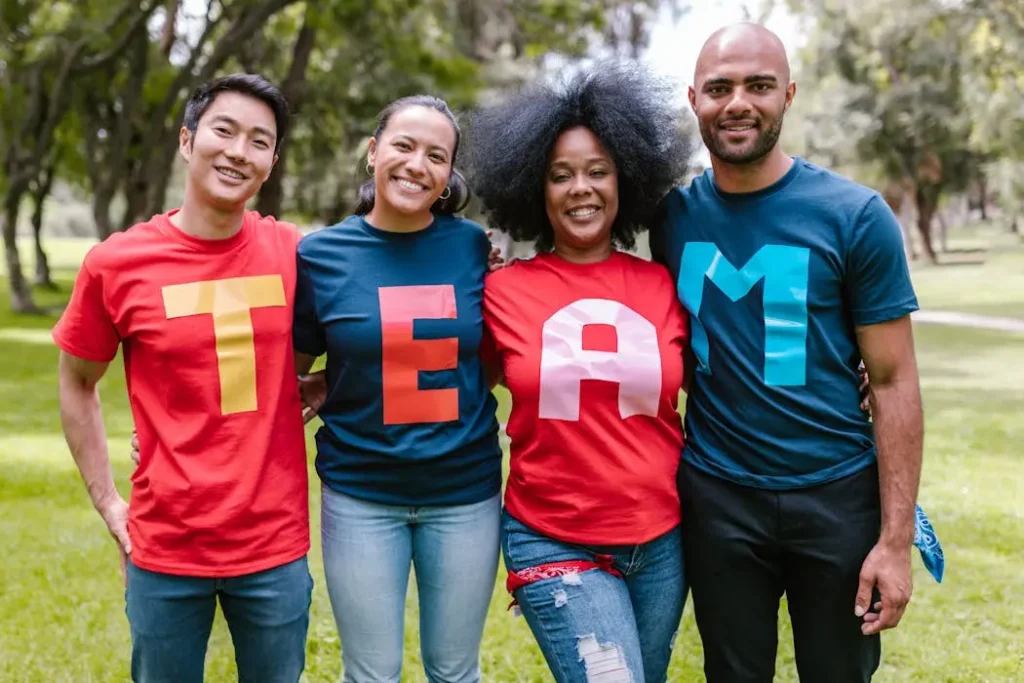
Walk into any business hub in Petaling Jaya or Kuala Lumpur, and you will notice a pattern. Sales teams, mechanics, and office staff are often wearing nearly identical uniforms. This is the “Catalog Trap.” Many businesses simply flip through a supplier’s catalogue, pick “Design A” in Blue, and slap a logo on it.
The problem? Your competitor just bought the same shirt.
As a leading Uniform Supplier KL, we believe your uniform should be as unique as your business model. In this comprehensive guide, we will dismantle the differences between ready-made stock and true custom manufacturing, and why the latter is the smartest investment for your brand capital.
1. The “Catalog Trap”: The Hidden Cost of Ready-Made
Ready-made uniforms (often called “Stock Service”) are pre-manufactured shirts sitting in a warehouse waiting to be sold. While they offer speed—you can get them in 24 hours—they come with significant downsides for serious brands.
The “Same Shirt” Syndrome
Imagine your sales team arrives at a trade show at KLCC. They are wearing a nice blue polo with white piping. Ten minutes later, they bump into a rival team wearing the exact same shirt, just with a different logo. This dilutes brand authority immediately. Customers subconsciously perceive generic uniforms as “commodity” rather than “premium.”
Stock Availability Nightmares
Ready-made relies on current stock levels. You might order 50 shirts today, but when you hire 10 new staff members next year, that specific design might be discontinued (End of Life). This forces you to change uniforms for the entire company or have a mismatched team. With Custom Made Uniform Malaysia services, we keep your patterns on file forever. We can manufacture 10 more pieces next year that look exactly like the ones you bought today.
2. Defining “Custom Made” (Cut & Sew)
What do we mean when we say “Custom Made”? In the manufacturing world, this is known as “Cut & Sew.”
Unlike printing on a blank t-shirt, the “Cut & Sew” process involves:
- Pattern Making: Creating a paper template based on your specific measurements and design.
- Cutting: Rolling out huge bolts of fabric (in your chosen colors) and cutting the specific panels (sleeves, body, collar).
- Assembly: Sewing these different colored panels together to create a unique design.
This process gives you the F1 Corporate Shirt look—where the collar might be Red, the body Black, and the side panels White, perfectly matching your company’s branding guidelines.
Comparison: Ready-Made vs. Custom Made
| Feature | Ready-Made (Catalog) | Custom Made (Cut & Sew) |
|---|---|---|
| Design Flexibility | Low (Pick what exists) | Unlimited (Company Uniform Design flexibility) |
| Color Matching | Approximate (Standard colors) | Exact (Match fabric to Brand Hex) |
| Sizing | Standard S/M/L | Custom Asian Fit / Plus Sizes |
| Lead Time | Fast (3-5 Days) | Moderate (2-3 Weeks) |
| MOQ (Min Order) | Low (10 pcs) | Medium (30-50 pcs) |
3. The “F1 Corporate Shirt” Phenomenon
In Malaysia, the term “F1 Shirt” doesn’t necessarily refer to Formula 1 racing, though that is the origin of the style. It refers to a specific type of corporate workwear that is professional yet sporty, characterized by:
- Mandarin Collar or Spread Collar: Often with contrasting inner linings.
- Concealed Buttons (Placket): For a cleaner, sleeker look.
- Color Blocking: Vertical or horizontal panels of contrasting colors.
This style is the gold standard for Malaysian SMEs, automotive workshops, and sales teams. It bridges the gap between a formal dress shirt (too hot for our weather) and a round-neck t-shirt (too casual). Choosing a Factory Direct Uniform partner ensures you get this complex construction done correctly, with reinforced stitching that lasts.
4. Fabric Science: Surviving the Malaysian Heat
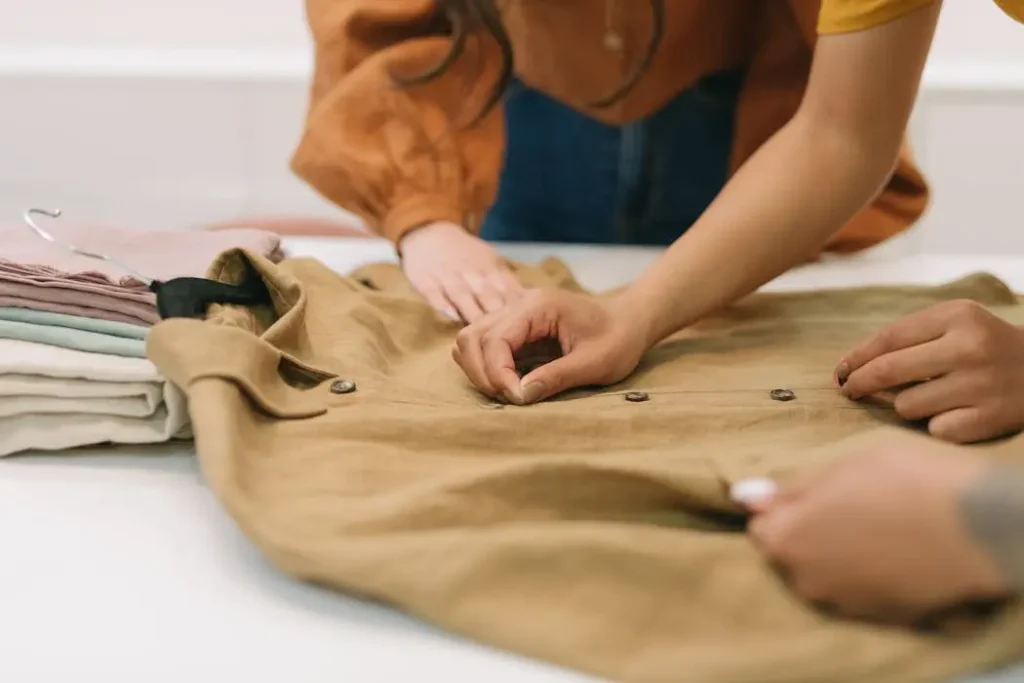
When designing a uniform for Kuala Lumpur or Penang, you cannot ignore the climate. A thick cotton shirt might look good in an air-conditioned boardroom, but it will be a nightmare for a technician working outdoors.
We recommend three specific fabric types for custom orders:
A. Polysoft (The Corporate Choice)
Polysoft is a synthetic blend that mimics the softness of cotton but has the durability of polyester. It is wrinkle-resistant (no ironing needed) and holds dye incredibly well. This is the standard for F1 shirts.
B. Microfiber Eyelet (The Outdoor Choice)
For logistics teams, delivery drivers, or event crews, Microfiber is non-negotiable. It has “wicking” properties that pull sweat away from the body to the fabric surface, where it evaporates. It keeps staff cool in 32°C heat.
C. Viscose / CVC Lacoste (The Premium Choice)
This is a Cotton-Polyester blend (Chief Value Cotton). It offers the thickness and premium feel of the famous “Crocodile” brand polos but with enough synthetic fiber to prevent shrinking in the wash.
5. Branding: Why Embroidery is King
Once you have cut and sewn the perfect shirt, how do you apply your logo? For corporate uniforms, we almost universally recommend Embroidery Services Malaysia.
Why Embroidery?
- Perception of Value: Thread has a 3D texture that reflects light. It looks expensive. A printed logo on a collar shirt often looks “cheap” or temporary.
- Durability: An embroidered logo will outlast the shirt itself. It can withstand hundreds of wash cycles without cracking or fading.
- Professionalism: For client-facing roles, embroidery signals stability and established presence.
However, for large designs on the back of the shirt (e.g., “SECURITY” or a massive event slogan), we might suggest Silk Screen Printing to keep the fabric light and breathable.
6. The Economics: Factory Direct vs. Agents
Many “Uniform Suppliers” in Malaysia are actually just middlemen (agents). They take your order, add a 30% markup, and outsource it to a factory like ours. This not only increases your cost but also creates a communication barrier. If there is a mistake with the stitching, the agent might not catch it until it’s too late.
Working with a Factory Direct Uniform supplier like JS Uniform means:
- Lower Costs: You pay factory gate prices.
- Direct QC: We inspect the sewing line personally.
- Faster Adjustments: Need to add an inch to the sleeve? We can tell the cutting room immediately.
7. How to Order Your Custom Uniform
Ready to upgrade your team’s look? Here is the simple 4-step process to get started with JS Uniform:
Step 1: Consultation & Concept
Send us your logo and your corporate brand colors (Pantone or Hex codes). Tell us your budget and the working environment (Indoor/Outdoor). We will suggest the best fabric.
Step 2: Digital Mock-Up
Our design team will create a digital visual of your Company Uniform Design. We can show you what the shirt looks like with different color panels (e.g., Red body with Black side panels).
Step 3: Sampling
For large orders, we can produce a physical sample or show you fabric swatches to feel the texture. This ensures you are 100% happy with the “Hand Feel” before mass production.
Step 4: Mass Production & Delivery
Once approved, our cutting room goes to work. Our typical lead time for custom orders is 2-3 weeks, depending on the complexity. We deliver nationwide across Malaysia.
Conclusion
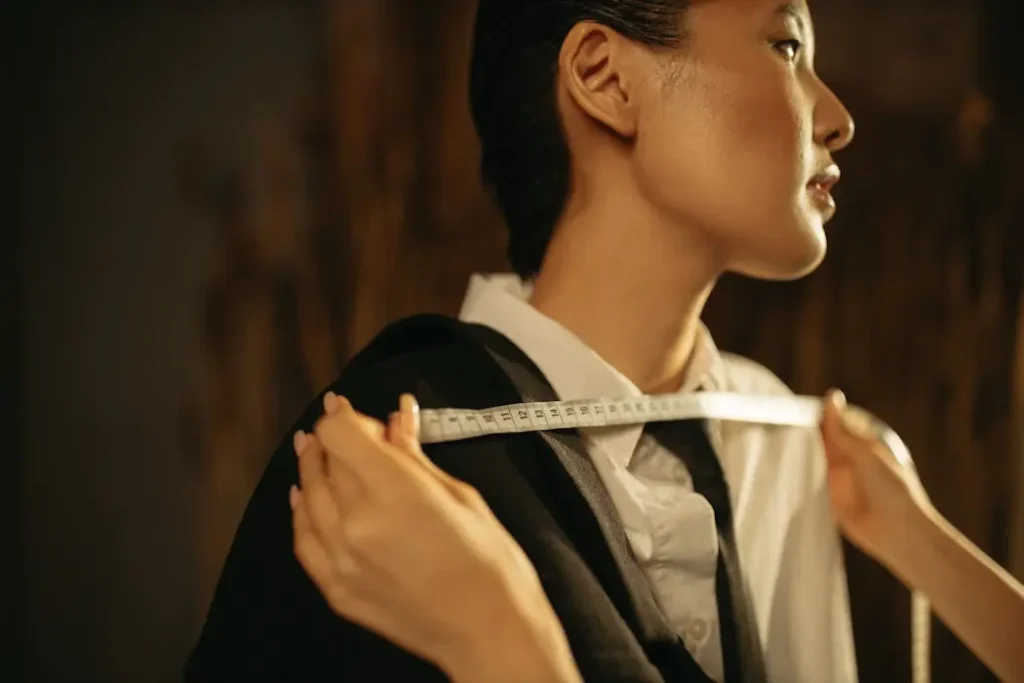
Your uniform is more than just clothing; it is the first thing a client sees when they walk through your door. It communicates your company’s discipline, attention to detail, and brand unity.
Do not settle for the same “Blue Polo” that every other company uses. Invest in a Custom Made Uniform Malaysia strategy that puts your brand first. Whether you need a complex F1 Corporate Shirt or a simple, high-quality cotton tee, JS Uniform has the factory capacity to deliver.
Start Your Custom Uniform Project Today
Get a Factory Direct Quote.
Min Order: 30 Pcs | Delivery: Nationwide Malaysia
WhatsApp Us for a Quote